

If you shower every day but still struggle with body odor, ancient wellness traditions suggest looking past the surface of your skin to the state of your digestion. Ancient Indian wellness tradition teaches that persistent body odor can often begin deep inside the system, and that relying solely on perfume, deodorant, or soap may only temporarily mask what is out of balance on the inside.
The Moment That Changed How I Think About Body Odor
My grandmother never bought deodorant.
Not once. In her entire life.
She smelled of sandalwood and coconut oil and something warm and clean that I could never quite name. Even in the Karnataka summer heat. Even after working in the kitchen for hours.

I asked her once — “Ajji, what is your secret?”
She laughed and pointed to her kitchen.
“The secret is in here,” she said. “Not in a bottle.”
It took me years to truly understand what she meant.
Why Perfume and Deodorant May Be Making Your Body Odor Worse
Here is something traditional wellness experts often note.
When you spray perfume or deodorant over body odor, the artificial scent frequently fades within an hour or two. Then the perfume smell and the body odor mix together — and the result can actually be more unpleasant than what you started with.
Instead of addressing the underlying cause, this approach simply layers chemicals over it.
Traditional Indian wellness practice has always cautioned against over-relying on heavy synthetic fragrances and harsh chemical-based cleansers. This is not just because they fail to address the root cause, but because they can disrupt the skin’s natural protective barrier over time. When the skin’s delicate microbiome and natural moisture balance are disturbed, it may inadvertently contribute to the very problem you are trying to soothe.
My grandmother’s wisdom was simple and powerful:
“Dirty inside, shiny outside — what is the use?”
When you support the inside, the outside naturally takes care of itself.

What Is the Traditional Root Cause of Body Odor?
According to centuries of Indian wellness tradition, two primary internal contributors to chronic body odor are:
Indigestion (Ajeerna) and Constipation (Malabaddhate)
In this ancient system, when your digestion is weak or imbalanced, food does not get efficiently broken down and absorbed. Instead, it ferments and produces metabolic byproducts — called Ama. When this waste accumulates, the body naturally utilizes its available elimination pathways, often pushing a portion of it out through the sweat glands.
From this traditional perspective, that is often where the persistent smell originates.
It is viewed less as a surface skin defect, and more as unprocessed internal impurities seeking an exit through your pores. This is why people who shower twice a day can still experience a heavy natural scent, while those who understand how to support deep digestion can often maintain clean, neutral sweat without relying on artificial cover-ups.
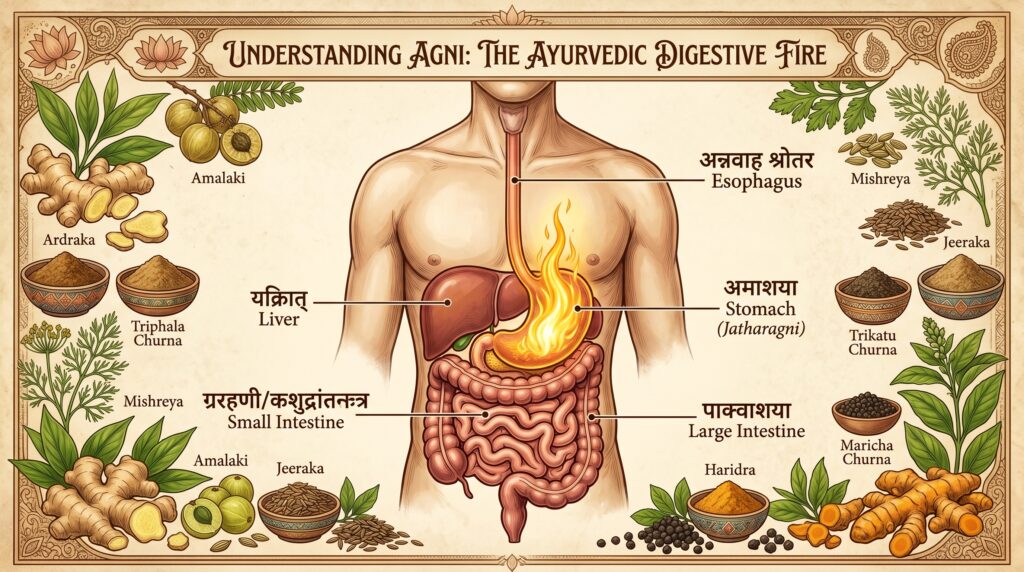
What Are the Three Types of Digestive Imbalance Associated With Body Odor?
This ancient system describes three types of digestive fire — called Agni — that when imbalanced, may lead to metabolic buildup and body odor. Understanding which pattern sounds like yours is the first step toward supporting your system from within.

What Is Mandagni — Weak Digestive Fire?
Mandagni means sluggish or weak digestion. Your digestive fire is low, meaning food sits in your stomach too long without being properly broken down.
People with a tendency toward Mandagni often experience bloating, heaviness after meals, weight gain, and fatigue. From this traditional perspective, the food simply does not get transformed into optimal nourishment. Instead it may create Ama — the traditional term for metabolic residue — that eventually seeps out through sweat as a heavy odor.
Traditional practitioners also note that Mandagni may prevent the body from properly producing the seven vital tissues — Rasa, Rakta, Mamsa, Asthi, Majja, Veerya, Shukra — that sustain deep, systemic health.
What Is Vishamagni — Irregular Digestive Fire?
Vishamagni means unpredictable or erratic digestion. Sometimes your appetite is strong, sometimes it disappears completely. You cannot easily predict how your stomach will behave from one day to the next.
This irregularity is associated with imbalanced Vata energy in traditional practice. The inconsistent digestive rhythm may create a variable production of metabolic waste — leading to an unpredictable pattern of body odor that seems to come and go without obvious reason.
What Is Teekshnagni — Overactive Digestive Fire?
Teekshnagni — also associated with intense metabolic states sometimes called Bhasmaka Roga — describes an excessive, hyperactive digestive fire. People with this pattern experience an almost insatiable hunger throughout the day. Because the fire burns too intensely, it can cause rapid, incomplete processing of food, potentially producing excessive Ama as a byproduct. This internal heat and metabolic residue may exit through sweat, contributing to a sharp body odor even in people who maintain meticulous outer hygiene.
What Is Samagni — The Wellness Goal?
The ancient verse says it beautifully:
“Samadosha Samagnicha Samdhatumalakriya — Prasanna Atma Manaha Swastha Ityabhidhiyate”
Translation: A person whose energies (doshas) are balanced, whose digestive fire (Agni) is balanced, whose tissues and waste elimination are functioning smoothly, and whose mind and spirit are at peace — that person is considered established in true health.
Samagni — a perfectly balanced digestive fire — is the ultimate goal. It is neither too strong, too weak, nor irregular. When Agni is functioning harmoniously, the tradition teaches that toxic byproducts are minimized, allowing the body’s sweat to remain naturally clean and virtually odorless.
A Traditional Inside-Out Wellness Routine for Natural Freshness
This is not a quick fix designed to mask a symptom. It is a holistic, time-tested system passed down through generations. Follow these steps in harmony and give your body the time it needs to naturally respond.
Step 1: Support Your Digestive Fire — The Internal Remedies
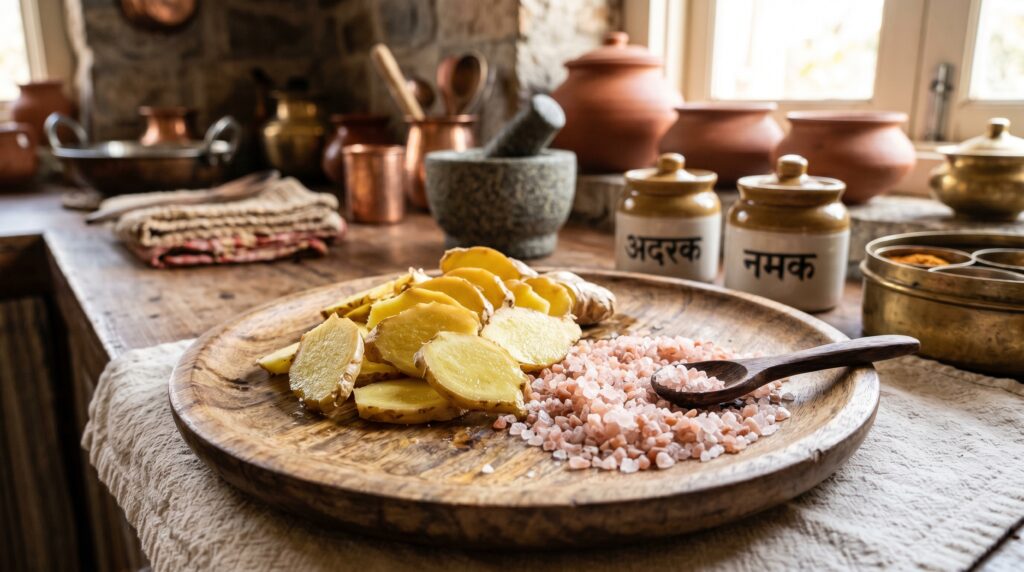
For Mandagni (Weak Digestion) — Raw Ginger With Rock Salt Before Meals
This is one of the oldest pre-meal rituals in the South Indian traditional wellness system, summarized by the classical principle:
“Bhojanagre Ardhaka Saindhava” — meaning, take ginger with rock salt before your meal.
What you need:
- 1 small piece of fresh raw ginger (about the size of your thumbnail)
- A pinch of Saindhava Lavana (Himalayan pink rock salt / Indian rock salt)
How to do it:
- Cut a small piece of fresh raw ginger
- Dip it in a small pinch of rock salt
- Chew it slowly and thoroughly — let the juice gently coat your mouth
- Do this 30 minutes before your main meal
- Practice daily before lunch and dinner
What tradition says: Raw ginger has been used for centuries to kindle sluggish Agni and support optimal digestion before meals. When digestion is supported, the body naturally produces less Ama, allowing sweat to become lighter and less odorous over time. Individual results will vary.
For Vishamagni (Irregular Digestion) — The Four-Spice Digestive Tonic
This recipe from Karnataka’s traditional wellness practice directly targets unpredictable, irregular digestive rhythms.
Ingredients:
- 1 teaspoon fresh ginger juice
- 4 teaspoons fresh lemon juice
- ½ teaspoon dry ginger powder (shunthi)
- 4 pinches black pepper powder (kali menasu)
- 4 pinches Pippali powder (long pepper / hippali)
- 50 ml water
How to prepare:
- Extract fresh ginger juice by grating raw ginger and squeezing through a clean cloth
- Extract fresh lemon juice
- Mix ginger juice, lemon juice, dry ginger powder, black pepper powder, and Pippali powder together
- Add 50 ml of room-temperature water and stir well
- Drink this mixture shortly before meals — once or twice daily
What tradition says: This traditional combination of five warming spices has been used for generations to bring stability to irregular digestion. When the digestive pattern becomes more consistent, the accumulation of erratic toxic byproducts is naturally minimized over time. Individual results vary.
For Teekshnagni / Bhasmaka Roga (Overactive Digestion) — Cluster Fig Bark Kashaya
This specialized remedy comes directly from traditional wellness texts and focuses on soothing excessive internal heat.
Attimarada — the Cluster Fig tree (Ficus racemosa) — is known in Kannada as Atti Mara. Its bark has been used for centuries in Karnataka to traditionally support the calming of an overactive digestive fire and soothe excessive hunger patterns.
Ingredients:
- 1 teaspoon Cluster Fig bark powder (Attimarada chakke pudi / Udumbara bark powder)
- 1 cup (250 ml) water
- ½ cup (125 ml) warm milk
How to prepare:
- Dry the Cluster Fig bark carefully in the shade — never in direct sunlight — and grind into a fine powder
- Add 1 teaspoon of this powder to 1 cup of water
- Boil gently until it reduces to half a cup (125 ml)
- Strain and mix this decoction with half a cup of warm milk
- Allow to cool slightly and drink warm once daily, preferably in the evening
Alternative traditional method: Boil 1 teaspoon of Cluster Fig bark powder directly in 1 cup of milk, reduce to half a cup, strain, and drink warm.
What tradition says: Cluster Fig bark possesses natural cooling and astringent qualities and has been traditionally used to help pacify an overactive digestive fire and reduce the heavy Ama production associated with excessive systemic heat.
Once a Week — The Traditional Reset Fast
Traditional practice recommends dedicating one day per week to light eating to give the digestive system a complete rest and recovery window.
On your light eating day, avoid heavy, complex foods and instead choose:
- Fresh seasonal fruits
- Tender coconut water
- Fresh, easily digestible vegetable juices — especially green leafy vegetables
- Plenty of pure water
This weekly practice gives your Agni a rest, helps the body clear out accumulated metabolic residue, and traditionally supports a return toward Samagni — balanced digestion.
Step 2: Support Regular Bowel Movements — The Nighttime Remedy
Efficient elimination is considered a major pillar of body freshness in this tradition. When waste sits too long in the intestines, it can ferment and produce metabolic toxins that may be reabsorbed into the system, eventually finding an alternative exit through sweat.
Choose one of these three traditional remedies every night before bed:
Option A — Ghee in Hot Water: Mix 1 to 2 teaspoons of pure cow’s ghee into 1 cup of hot water. Drink slowly before sleeping.
Option B — Castor Oil in Hot Water: Mix 1 to 2 teaspoons of pure castor oil (haralu enne) into 1 cup of hot water. Drink before sleeping.
Option C — Castor Oil in Warm Milk: Mix 1 to 2 teaspoons of castor oil into 1 cup of warm milk. Drink before sleeping.
Important safety note: Castor oil is a strong traditional laxative and should not be used daily for long periods. Use it for a brief window to help restore regular habits, then transition to the gentler, daily-safe ghee method. Do not use castor oil if you are pregnant or nursing. Always consult your healthcare provider before use if you have an underlying digestive condition.
Step 3: Support Internal Wellness — Morning Wild Gooseberry Juice
In this traditional system, the quality of your sweat is closely tied to the overall balance of the blood tissue — what practitioners call Rakta Dhatu Vikara.
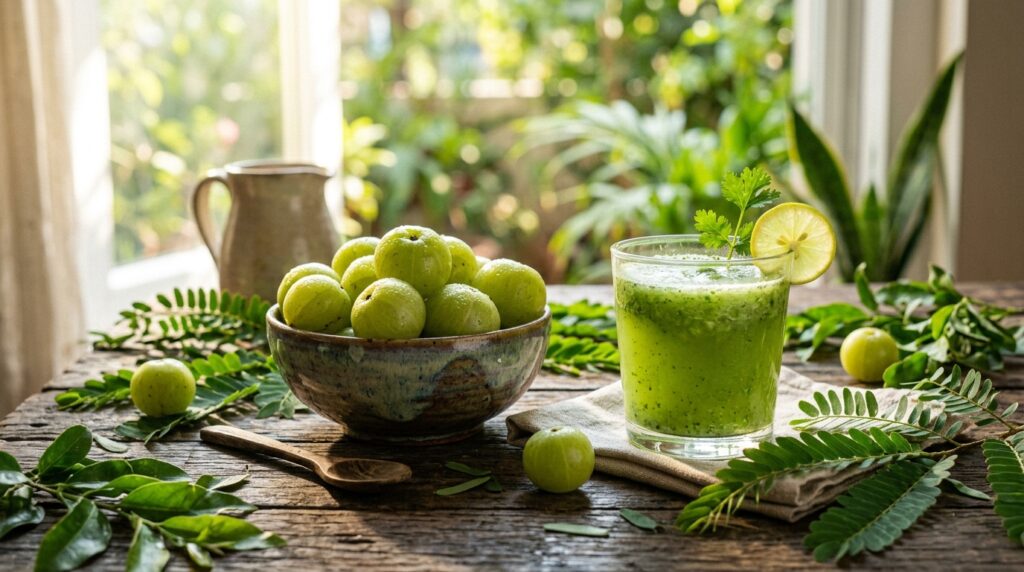
Bettada Nellikai — Wild Hill Gooseberry — has been treasured for centuries in South Indian tradition as one of the most valued fruits for overall internal wellness and natural vitality. It has been used extensively across generations for internal cleansing and systemic support.
The Practice:
- Drink one small glass of fresh Bettada Nellikai juice every morning on an empty stomach
- Continue this routine consistently for one full month without a break
What tradition says: Wild gooseberry has been revered in South Indian households for centuries as a fruit that supports the body’s natural internal cleansing. When the internal pathways are clean and balanced, sweat naturally carries less odor over time. Individual results will naturally vary.
Step 4: The External Body Rituals — After Addressing the Inside
Important: Traditional practice teaches that these external applications work most effectively when combined with the internal steps above.
My grandmother always said — “Fixing only the outside when the inside is dirty is like painting a rotten wall. The rot will always come back.”
The Sandalwood Body Pack
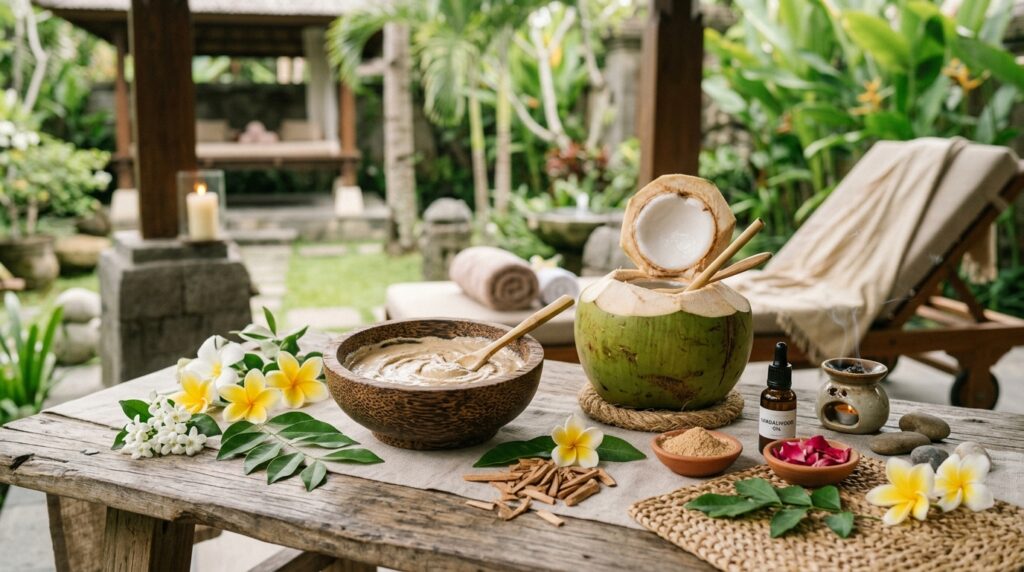
What you need:
- Pure sandalwood (Gandha) — a small piece or authentic sandalwood powder
- Fresh tender coconut water OR fresh milk
How to use:
- Grind sandalwood thoroughly in tender coconut water or fresh milk to create a smooth paste
- Apply this paste evenly all over your body
- Leave on for up to one hour
- Bathe with cool or lukewarm water
Sandalwood has been loved for centuries in South Indian households as a cooling, aromatic skin application. It is traditionally used to support a naturally balanced and fresh skin environment.
The Lemon and Aloe Vera Body Application
What you need:
- Fresh lemon juice — 2 tablespoons
- Fresh aloe vera gel — 2 tablespoons
How to use:
- Mix equal parts fresh lemon juice and fresh aloe vera gel
- Apply all over the body
- Leave on for one hour
- Rinse with cool or lukewarm water
In traditional practice, lemon is valued for its clarifying properties and its ability to naturally support a balanced skin environment, while aloe vera deeply soothes, cools, and protects the skin’s natural moisture.
The Multani Mitti and Aloe Vera Body Pack
What you need:
- Multani Mitti (Fuller’s Earth) — 3 to 4 tablespoons
- Fresh aloe vera gel — 3 to 4 tablespoons
- Water — enough to make a smooth paste
How to use:
- Mix Multani Mitti and aloe vera gel with a little water to form a smooth clay paste
- Apply evenly over the skin
- Leave on comfortably for one hour
- Rinse thoroughly with cool or lukewarm water
Multani Mitti has been used for generations across India as a natural purifying clay. It gently draws away impurities and excess oil from the skin’s surface, leaving a deep sense of natural cleanliness.
Step 5: Replace Your Soap — The Traditional Snana Choorna Recipe
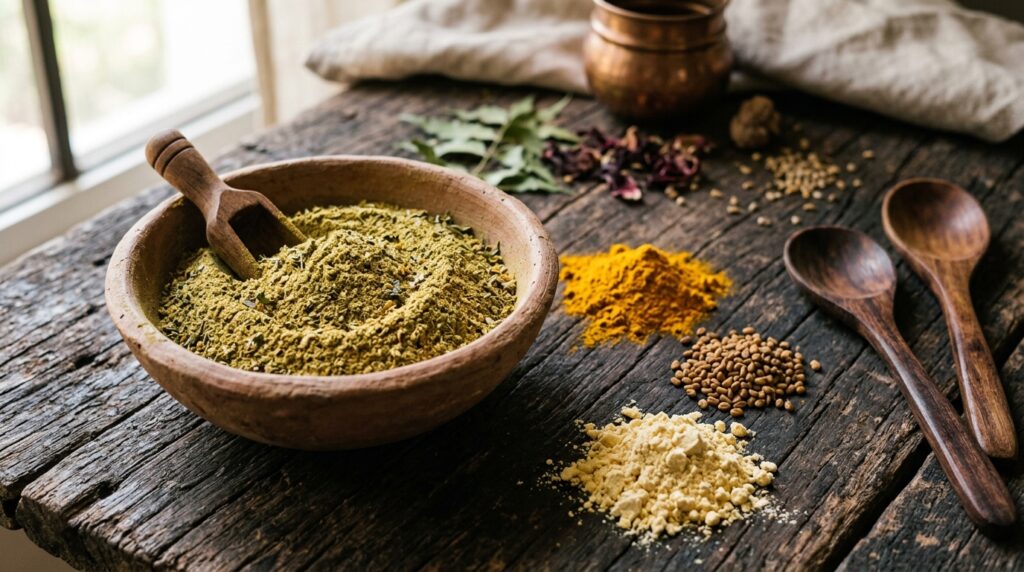
Replacing chemical-heavy commercial soaps with a herbal bath powder — called Snana Choorna — can be a deeply transformative step for your skin health. Traditional practice suggests that harsh synthetic cleansers may disrupt the skin’s natural protective layer over time, whereas natural plant-based cleansing nourishes the skin while keeping it genuinely fresh.
My grandmother never used soap. She used Snana Choorna. And her skin remained radiant and healthy throughout her life.
Here is the traditional Karnataka recipe:
Ingredients:
- 100 grams Fenugreek seeds (Menthya / Methi)
- 300 grams Chickpea flour (Kadalehittu / Besan)
- 50 grams Kasturi Turmeric (Kasturi Arishina / Wild Turmeric — Note: This is a fragrant cosmetic variety, entirely distinct from standard cooking turmeric)
How to prepare:
- Lightly dry-roast the fenugreek seeds, let them cool, and grind into a very fine powder
- Mix the fenugreek powder, chickpea flour, and Kasturi Turmeric powder thoroughly together
- Store in an airtight glass container in a cool, dry place
- This batch will last several weeks
How to use:
- Take 2 to 3 tablespoons of the powder in a small bowl
- Add just enough water to make a smooth, thick paste
- Apply all over your wet body as you would use soap
- Gently massage the skin in circular motions
- Rinse thoroughly with cool or lukewarm water
What each ingredient brings:
Fenugreek has been used in traditional wellness for centuries due to its exceptional skin-purifying and soothing properties. Generations of South Indian women have used it as part of their daily bathing practice.
Chickpea flour gently removes dead skin cells and absorbs excess surface oil without stripping the skin’s natural moisture. It leaves skin feeling soft and naturally clean.
Kasturi Turmeric is the specific variety traditionally reserved for external skincare — never for cooking. It is traditionally used to support skin brightness, natural skin health, and surface balance. It leaves a beautifully subtle, natural fragrance on the skin.
This combination does not just cleanse the skin. It nourishes it — the way our grandmothers always intended.
One More Essential Practice — Be Mindful of Water Temperature
Traditional practice generally recommends using cool or lukewarm water for bathing rather than very hot water.
Very hot water can inadvertently dry out the skin, strip away the protective oils that guard your skin’s natural balance, and disturb your skin’s microbiome. Cool or lukewarm water is traditionally preferred as a gentler, more supportive approach to long-term skin health.
Use cool water for bathing whenever possible. If cool water is difficult, use lukewarm — just slightly warm.
This simple practice, combined consistently with the Snana Choorna above, may support noticeable improvement in skin health over time.
Your Complete Daily Wellness Schedule

| Time | Practice |
|---|---|
| Morning — Empty stomach | Wild Gooseberry juice — continue consistently for one full month |
| 30 minutes before meals | Raw ginger with rock salt (Mandagni) OR Four-spice digestive tonic (Vishamagni) |
| Before bathing | Sandalwood pack / Lemon-Aloe application / Multani Mitti pack — leave one hour |
| During bathing | Snana Choorna herbal bath powder — in place of soap |
| Bath water | Cool or lukewarm only — avoid very hot water |
| Before bedtime | Ghee or occasional castor oil remedy — to support regular elimination |
| Once a week | Light fruit and fresh juice day — digestive rest and reset |
| Evening (Bhasmaka Roga pattern only) | Cluster Fig bark kashaya with warm milk |
How Long Before You May Notice a Difference?
Many people who adopt this complete system consistently report a noticeable improvement in their natural skin freshness within a few weeks. However because every body is entirely unique, response times naturally vary. What takes one person two weeks may take another four to six weeks as the internal system gradually stabilizes.
The traditional approach is never about an overnight quick fix. It is about gently restoring balance from the inside out.
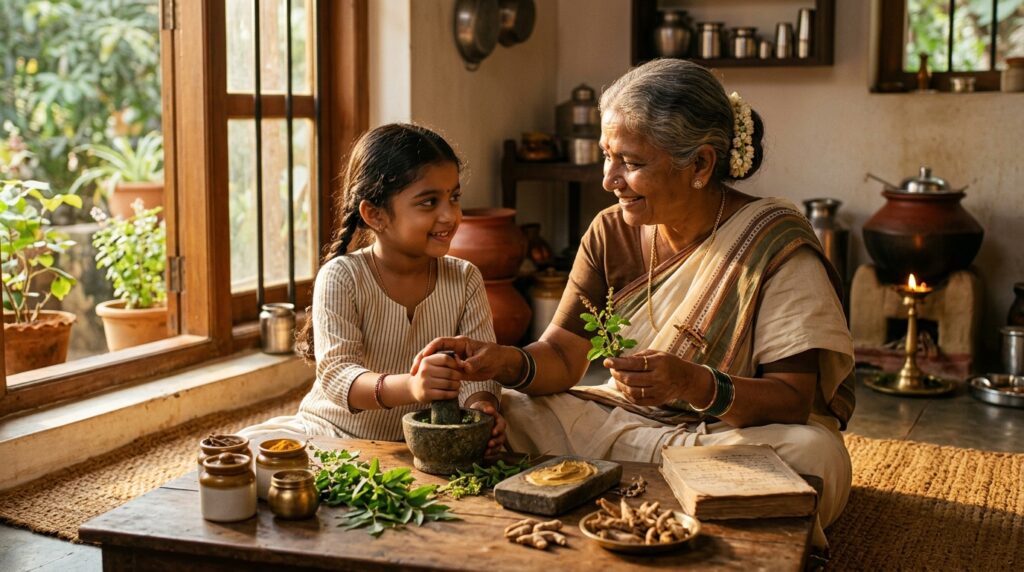
Consistency is the true key. My grandmother did not practice these things occasionally — they were simply the effortless rhythms of her daily life. That is the real secret.
Frequently Asked Questions
Q: Why do I still have body odor even though I shower every day?
A: Showering thoroughly cleanses the skin’s surface temporarily but does not address internal metabolic factors. According to centuries of Indian wellness tradition, persistent body odor can stem from underlying sluggish digestion or inefficient elimination, where internal waste (Ama) may be carried out via the sweat glands. Supporting your digestion from within may offer more lasting, comprehensive results alongside good external hygiene. Always consult a healthcare professional about any persistent concerns.
Q: What is Kasturi Turmeric and where can I find it in the United States?
A: Kasturi Turmeric (also known as Wild Turmeric or Curcuma aromatica) is a distinct variety used exclusively for skincare and cosmetics in traditional Indian practice — never for cooking. It has a lighter color, does not intensely stain the skin bright yellow, and has a lovely, sweet, herbal aroma. It is widely available online (search “pure Kasturi turmeric powder”) and at specialized Indian grocery stores across the United States.
Q: Is it safe to use castor oil for sluggish elimination?
A: Using a small amount of castor oil occasionally is a time-honored traditional remedy for temporary sluggishness. However, because it is a potent stimulant laxative, daily long-term use is not recommended. Use it for a short window to help reset your patterns, then switch to the gentler ghee-in-hot-water method for daily maintenance. Do not use castor oil if you are pregnant, breastfeeding, or managing an acute digestive condition. Always consult your doctor before introducing it into your routine.
Q: Where can I source Cluster Fig bark (Attimarada / Udumbara bark) in the USA?
A: Cluster Fig bark powder (frequently sold under its traditional names Udumbara or Ficus racemosa) can be purchased from authentic traditional and botanical suppliers online or at well-stocked Indian wellness stores. Always verify that you are buying pure, raw, additive-free powder from a reputable source.
Q: Can I use the Snana Choorna bath powder as a facial cleanser?
A: Yes. The combination of chickpea flour, fenugreek, and Kasturi Turmeric is highly gentle and has been used as a daily facial wash in South Asian households for generations. Always perform a quick patch test on your inner arm first to check for personal sensitivities, and avoid the immediate eye area. On very fair skin tones, the wild turmeric may leave an extremely faint warm tint that easily rinses away with water. Consult a dermatologist if you have any skin condition.
Q: Why does my body odor seem to worsen during the summer months?
A: During summer, the body naturally increases sweat production to regulate temperature. If there is an internal accumulation of metabolic residue (Ama), more of it may naturally be carried to the surface during this process, making odor more apparent. Traditional practice views this as a helpful signal that your digestion needs a little extra care during hot months — through the weekly light fast, hydrating foods, and the internal digestive practices described above.
Q: Is the Snana Choorna bath powder safe for young children?
A: This herbal recipe is traditionally used for bathing children in South Indian homes, as the natural ingredients are considered gentle and nourishing. However, because young skin can be sensitive, always perform a small patch test on their arm first and consult your pediatrician if your child has a history of eczema, allergies, or any skin condition.
The True Meaning of Natural Cleanliness
The global deodorant market is worth billions of dollars annually — yet persistent body odor remains one of the most common wellness concerns people search about online.
My grandmother spent nothing at all, yet she possessed the cleanest, most comforting natural scent I have ever known.
The difference did not lie in products. It lay in understanding.
She recognized that sweat is not an enemy to be blocked or covered up. It is an intelligent messenger. When our natural scent becomes heavy, the body is gently signaling that something inside needs attention and support.
By listening to that message and addressing your wellness from the source, you can experience a genuine, lasting kind of clean. This profound heritage has lived quietly in Indian kitchens for centuries, passed down lovingly from grandmother to daughter.
Now it is yours to share and enjoy. 🌿
If this helped you, share it with someone who has been struggling quietly. Nobody should have to suffer with something that has a simple, ancient, beautiful answer.
Medical Disclaimer
The information provided in this article is based on traditional wellness knowledge passed down through generations within a Karnataka Brahmin household and is intended strictly for educational and informational purposes only. It does not constitute modern medical advice, nor is it intended to diagnose, treat, cure, or prevent any disease or medical condition. Individual results can vary significantly based on personal constitution, lifestyle, and health status. The remedies and practices described reflect traditional knowledge passed down through generations — they do not represent modern clinical medical advice. Always consult a qualified, licensed healthcare professional or your primary physician before making any changes to your health routine, especially if you are pregnant, nursing, taking medications, or managing an underlying medical condition. The author is a traditional wellness knowledge carrier, not a licensed medical practitioner.
About the Author
Sanathani is an engineer by education and a traditional wellness knowledge carrier by birth, raised in a Karnataka Brahmin household where traditional remedies have been practiced and preserved for centuries. With access to thousands of authentic Kannada traditional wellness transcripts from practitioners and gurus, she translates knowledge that has never appeared in English before. Through AyurLoom, Sanathani carries this living wisdom into English for the very first time. “These remedies are not invented. They are remembered.” 🌿
Meta Description: Shower daily but still have body odor? Traditional Indian wisdom says the problem starts in your gut. Discover Cluster Fig bark kashaya, the ginger-rock salt ritual, homemade Snana Choorna bath powder, and wild gooseberry juice.
(158 characters)
SEO Tags
natural remedies for body odor, ancient Indian remedy body odor, why do I smell even after showering, body odor from digestion traditional, how to get rid of body odor naturally, Snana Choorna recipe, herbal bath powder for body odor, Mandagni Vishamagni Teekshnagni, Cluster Fig bark kashaya, Attimarada remedy body odor, ginger rock salt before meals digestion, Kasturi turmeric bath powder, wild gooseberry juice internal wellness, castor oil constipation traditional remedy, Multani mitti body pack, lemon aloe vera body application, replace soap natural herbal, Karnataka traditional home remedy, Bhasmaka Roga traditional approach, Udumbara bark powder body odor