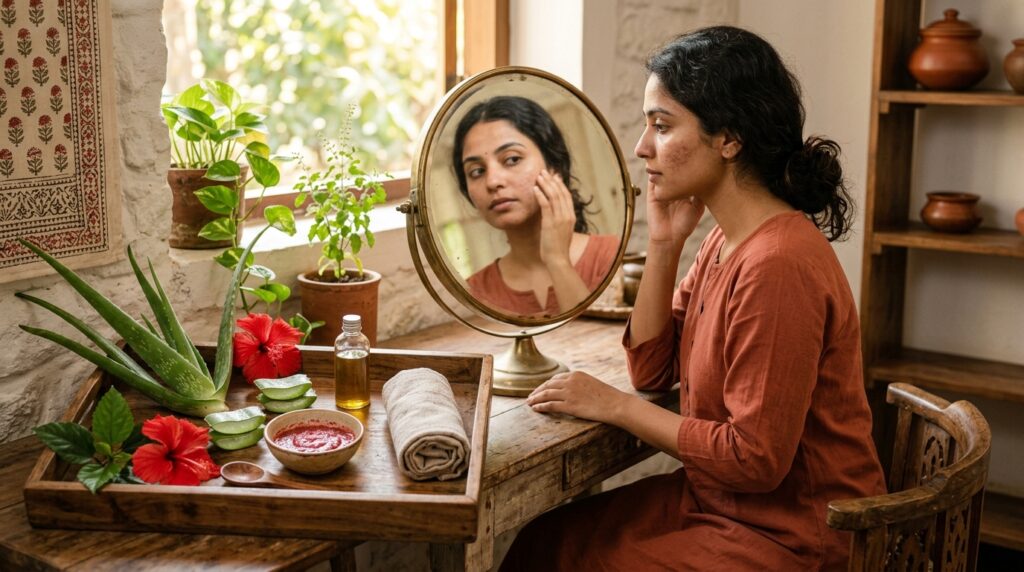
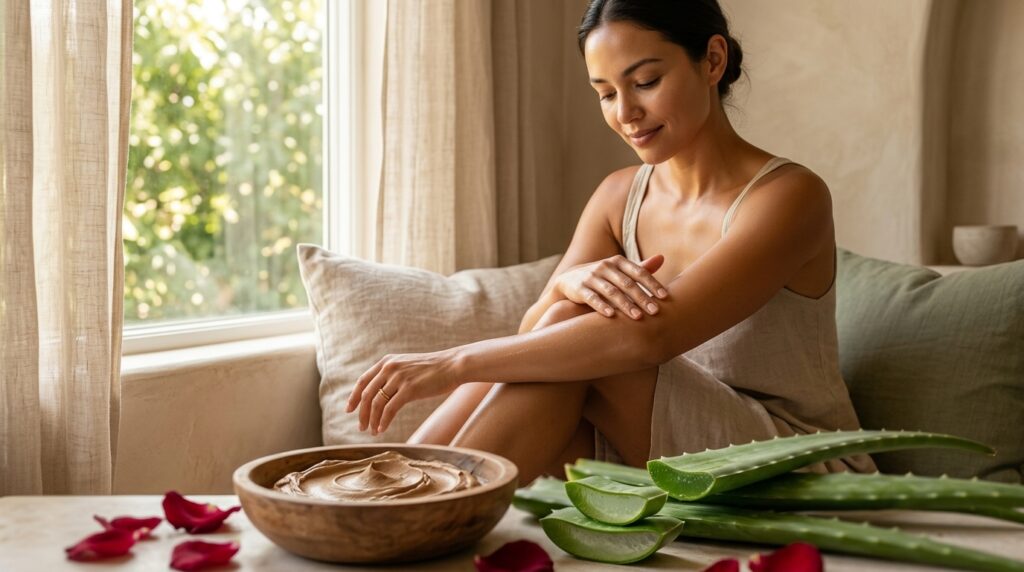
If your skin — face, arms, legs, anywhere — has started looking dull and tired, Ayurvedic tradition offers a simple Natural skin glow full-body remedy using aloe vera, rose water, Multani mitti (a natural clay), coconut oil, vitamin E, and glycerin. The paste is applied generously, left on for 20 to 45 minutes depending on your skin’s comfort level, then rinsed off with cool water using a natural cleansing powder instead of chemical soap. This is a traditional beauty practice shared for educational purposes, not a medical treatment, and results will vary from person to person.
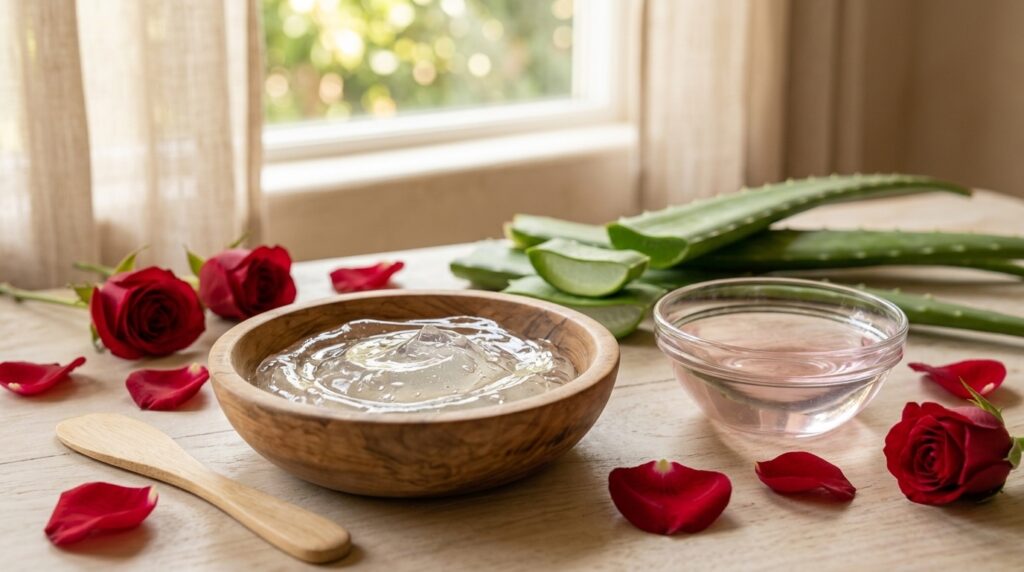
Table of Contents
- Why Skin Looks Dull in the First Place
- The Ingredients Behind This Tradition
- How to Make and Use This Mask
- Why Soap Is Skipped in This Routine
- Things to Keep in Mind
- Frequently Asked Questions
Why Skin Looks Dull in the First Place
My grandmother used to say that skin tells the truth even when we don’t want it to. A tired week, a stretch of bad food, too much sun — she could read all of it in someone’s face before they said a single word.
In Ayurvedic tradition, every person is believed to have a unique constitution, and many factors — including environment, sun exposure, lifestyle, and natural skin pigmentation — influence how the skin appears from day to day.
That means some dullness is simply part of who you are, shaped by your individual constitution. But day-to-day dullness — the kind that comes and goes with how you’re eating, sleeping, or how much harsh product you’ve been using on your skin — is the kind this traditional remedy is meant to address.
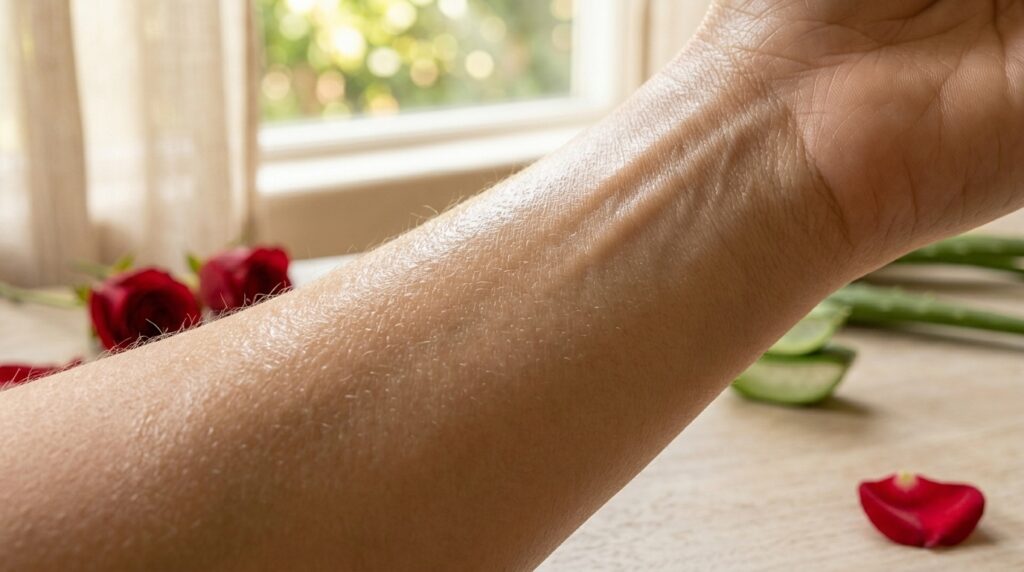
This isn’t a face-only routine, either. In South Indian households, the idea was always whole-body care — hands, neck, legs, everywhere — not just the face most of us focus on today.
The Ingredients Behind This Tradition
Before getting into the recipe, it helps to know what each ingredient is traditionally believed to bring to the mix. Most are easy to find in the United States through grocery stores, pharmacies, Indian markets, or online retailers.
Aloe vera gel has long been used in Indian households as a cooling, soothing base for skin remedies. Fresh gel scraped from the leaf is traditionally preferred, but a pure, additive-free store-bought gel works as a substitute.
Rose water is traditionally used as a gentle toner-like addition, believed to calm and refresh the skin.
Multani mitti, also known as Fuller’s earth, is a natural clay that has been traditionally used to absorb excess oil and leave the skin feeling refreshed.
Cold-pressed coconut oil adds moisture back into the mix, balancing out the clay’s drying effect.
Vitamin E (from a simple drugstore capsule) is added for its traditional association with skin nourishment.
Glycerin is included for its moisturizing, humectant properties — helping the skin hold onto moisture.
While these ingredients have long histories in traditional cosmetic use, modern scientific research on their combined effects for skin brightening remains limited. The descriptions in this article reflect traditional practice rather than established medical consensus.
How to Make and Use This Natural Skin Glow Mask
This recipe makes enough for a full-body application, not just the face.
Ingredients:
- 8 to 10 tablespoons aloe vera gel
- 8 to 10 tablespoons rose water
- 3 to 4 tablespoons Multani mitti (Fuller’s earth)
- 1 to 2 tablespoons cold-pressed coconut oil
- 3 to 4 vitamin E capsules (pierced and squeezed out)
- 2 to 3 drops glycerin
Steps:
- Combine the aloe vera gel and rose water in a bowl in roughly equal parts.
- Add the Multani mitti and mix until you have a smooth, spreadable paste.
- Stir in the coconut oil, vitamin E (squeezed from the capsules), and glycerin.
- Mix everything thoroughly until well blended.
- Apply the paste generously over your body — face, neck, arms, legs, wherever you’d like.
- Gently massage it in using circular motions.
- Leave on for 20 to 45 minutes, depending on your skin’s comfort level — drier skin types may want to stay closer to 20 minutes.
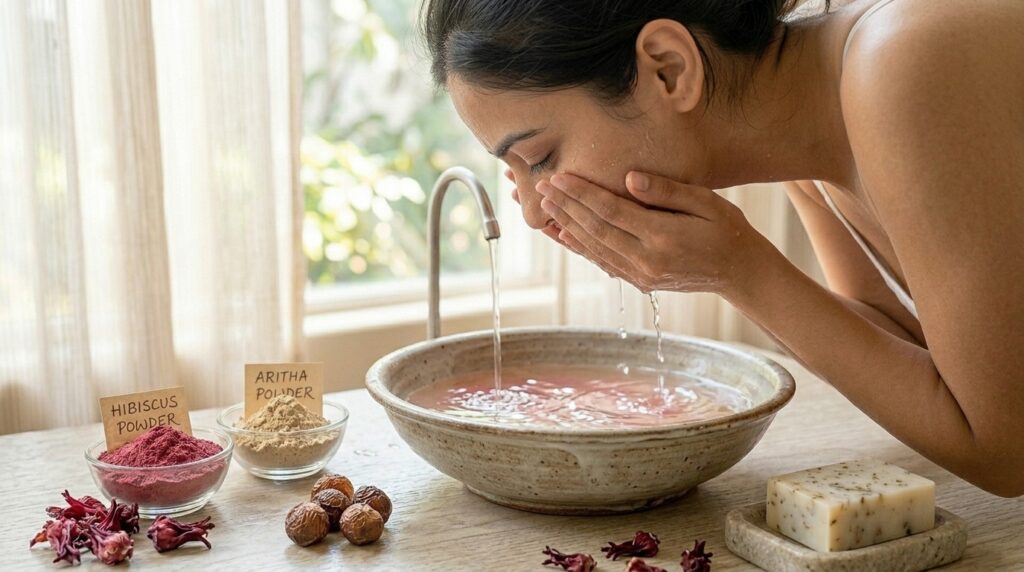
- Rinse off with cool water, using a natural cleansing powder instead of chemical soap (more on this below).
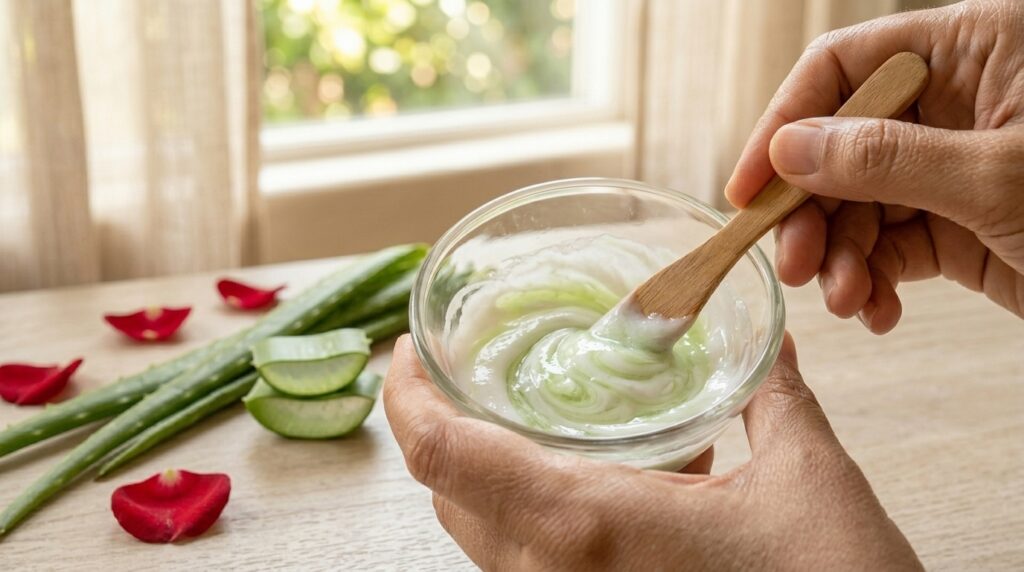
According to household tradition, some people report noticing a visible difference after a single application, though experiences vary significantly from person to person and these observations are based on generational practice rather than clinical measurement.
Why Soap Is Skipped in This Routine
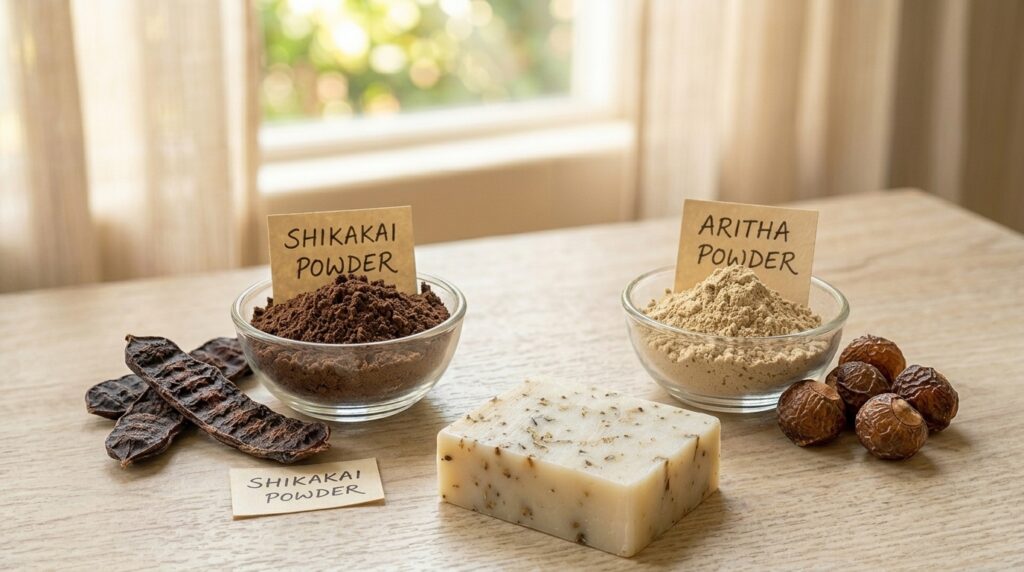
This tradition specifically avoids heavily fragranced commercial soaps when rinsing off. Instead, natural cleansing powders like Shikakai or Aritha (soapnut), or Multani mitti itself, are used.
The idea behind this is simple: this routine is meant to nourish and calm the skin, and many traditional practitioners believe that following it with a harsh, fragranced chemical soap undoes some of that benefit. Whether or not you choose to adopt this part of the practice, it’s a reasonable, low-risk substitution worth trying if your skin tends to feel stripped or tight after regular soap.
Things to Keep in Mind
- Patch test first. Apply a small amount to your inner forearm and wait 24 hours before using it on your whole body, especially your face.
- Multani mitti can be drying for some skin types if left on too long or used too often. Start with 20 minutes and adjust based on how your skin feels, and consider using this routine once or twice a week rather than daily if your skin tends to be dry.
- Pure ingredients matter. Use fresh aloe vera gel if possible, and pure rose water and coconut oil without added fragrances or synthetic preservatives, since the goal here is to move away from heavily processed products.
- This is a cosmetic routine, not a treatment for skin conditions. If you have eczema, psoriasis, acne that isn’t responding to over-the-counter care, or any diagnosed skin condition, talk to a dermatologist before adding any new topical routine.
- Stop if you notice irritation. Redness, itching, or breakouts after use mean this particular combination isn’t right for your skin — discontinue and consult a dermatologist if symptoms persist.
- Vitamin E capsules vary. Make sure you’re using a topical-safe vitamin E oil capsule, not a supplement intended only for oral use without checking the label.
Frequently Asked Questions
Can I use this mask on my face every day? This is traditionally used as an occasional treatment rather than a daily one, especially because Multani mitti can be drying with frequent use. Two to three times a week is a reasonable starting point — adjust based on how your skin responds.
Can I use this mask if I have dry skin? People with dry skin may prefer shorter application times and may choose to increase the coconut oil slightly. Because everyone’s skin responds differently, start slowly and adjust according to comfort.
Can I use this if I have oily skin? Multani mitti’s oil-absorbing quality is traditionally considered well suited to oilier skin types, and you may find you can leave the mask on toward the longer end of the 20-to-45-minute range. As always, patch test first and adjust based on how your skin feels.
Can I refrigerate the leftover mixture? Because this mask contains fresh aloe vera and no preservatives, it’s best made fresh and used the same day. If you do refrigerate leftovers, use them within a day or two and check for any change in smell or texture before applying.
Is glycerin necessary? Glycerin is included to help the skin hold onto moisture, especially since Multani mitti can be drying. If you don’t have it on hand, you can leave it out, though your skin may feel slightly tighter afterward — increasing the coconut oil slightly can help balance that.
Is Multani mitti safe for sensitive skin? Multani mitti is generally considered gentle, but “sensitive skin” varies a lot from person to person. Always patch test first, and if you have a diagnosed sensitive skin condition, check with your dermatologist before trying it.
Can I substitute store-bought aloe vera gel for fresh aloe? Yes. Fresh aloe straight from the leaf is traditionally preferred, but a pure, additive-free store-bought gel is a practical substitute — just check the label for added fragrances, alcohol, or coloring.
Where can I find Multani mitti and Shikakai powder in the United States? Both are widely available through Indian grocery stores, Ayurvedic retailers, and online marketplaces. Look for products with minimal added ingredients.
A Closing Thought
My grandmother never had a skincare routine with ten steps and a dozen products. She had this — a handful of ingredients from the kitchen, a little patience, and cool water at the end. There was nothing rushed about it.
If your skin has been feeling dull and tired, this might be worth trying — not because it promises a miracle, but because it’s gentle, simple, and rooted in a quiet tradition that has been passed from one generation to the next in Indian homes.
If this was helpful, you might enjoy exploring more traditional approaches to natural skin and body care on AyurLoom.
Medical Disclaimer
The information in this article is based on traditional wellness knowledge passed down through generations in a Karnataka Brahmin household and is intended strictly for educational and informational purposes only. It does not constitute medical advice, nor is it intended to diagnose, treat, cure, or prevent any disease or medical condition. The statements in this article have not been evaluated by the U.S. Food and Drug Administration. Individual results vary significantly. Always consult a qualified, licensed healthcare professional — including a dermatologist for skin concerns — before making any changes to your skincare routine, especially if you are pregnant, nursing, or managing a diagnosed skin condition. The author is a traditional wellness knowledge carrier, not a licensed medical practitioner.
About the Author
Sanathani is an engineer by education, raised in a Karnataka Brahmin household where traditional wellness practices were passed from one generation to the next. She translates Kannada household knowledge for modern English readers. Through AyurLoom, Sanathani carries this living wisdom into English for the very first time. “These remedies are not invented. They are remembered.” 🌿