Ayurvedic tradition links dark spots and pigmentation to imbalances in Pitta — the body’s heat and metabolic energy — which is believed to show up on the skin when out of balance. This routine combines a daily 10 to 15 minute aloe vera face massage with a hibiscus and rose water paste, a rice flour and sugar scrub, and a switch from commercial soap to a homemade herbal bath powder. These are traditional cosmetic practices shared for educational purposes, not a medical treatment, and consistent use over several months is traditionally considered necessary to notice a difference.
Table of Contents
- What Ayurvedic Tradition Says About Dark Spots
- The Daily Aloe Vera Massage
- Two Face Pack Options for Dark Spots
- Why This Tradition Avoids Commercial Soap
- How to Use This Routine
- Things to Keep in Mind
- Frequently Asked Questions
What Ayurvedic Tradition Says About Dark Spots
My grandmother never used the word “pigmentation.” She’d just look at someone’s face and say their Pitta was “acting up” — and somehow, everyone in the family understood exactly what that meant.
In Ayurveda, Pitta is the energy associated with heat, transformation, and metabolism. Traditional texts describe five sub-types of Pitta, each linked to a different bodily function. Two of them — Alochaka Pitta (associated with vision and the eyes) and Bhrajaka Pitta (associated with skin and complexion) — are traditionally connected to how the skin looks and behaves.
According to this tradition, when Bhrajaka Pitta is out of balance, it may show up as dark spots, pigmentation, and enlarged pores on the face. This is a traditional framework for understanding skin changes, not a clinically established explanation for what dermatologists call hyperpigmentation, which has many possible causes including sun exposure, hormonal changes, and skin inflammation.
Daily sun protection remains one of the most important dermatologist-recommended steps for preventing the appearance of new dark spots, and is worth pairing with any natural routine you choose to try.
The Daily Aloe Vera Massage
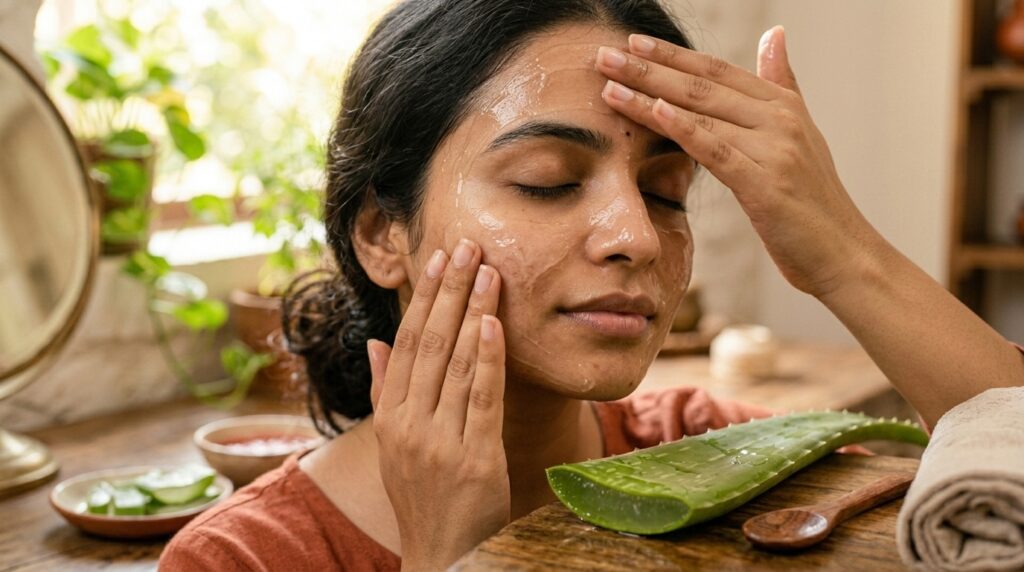
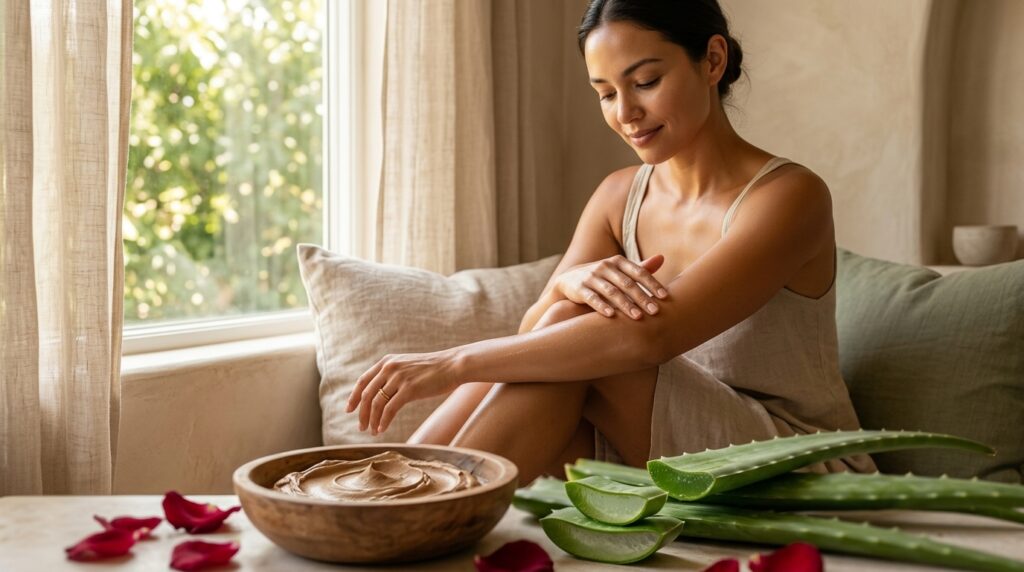
The first and most emphasized remedy in this tradition is a long, deliberate face massage with pure aloe vera gel.
This isn’t a quick application. The instruction is specific: massage the gel into the face for a full 10 to 15 minutes, not just apply it and walk away. In this tradition, the longer massage itself is considered an important part of the practice.
After massaging for 10 to 15 minutes, the gel is left on for some additional time before rinsing off with cool water. This tradition holds that consistent daily use over about three months is generally needed before noticing a meaningful difference in dark spots — a timeline based on generational practice rather than a clinical study.
Two Face Pack Options for Dark Spots
Beyond the daily massage, this tradition offers two face pack recipes that can be used a few times a week alongside it.
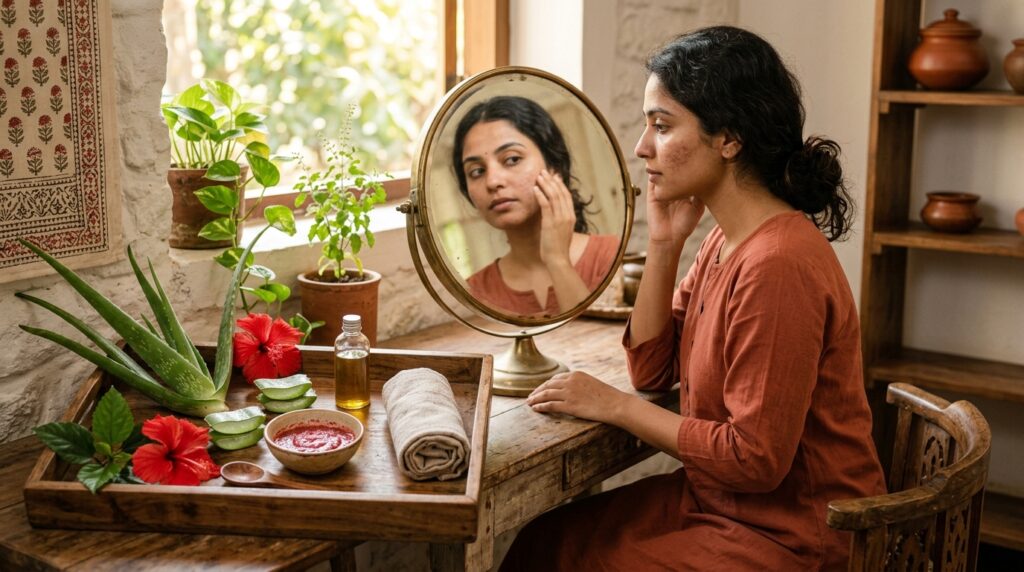
Option 1: Aloe Vera, Hibiscus, and Rose Water Paste
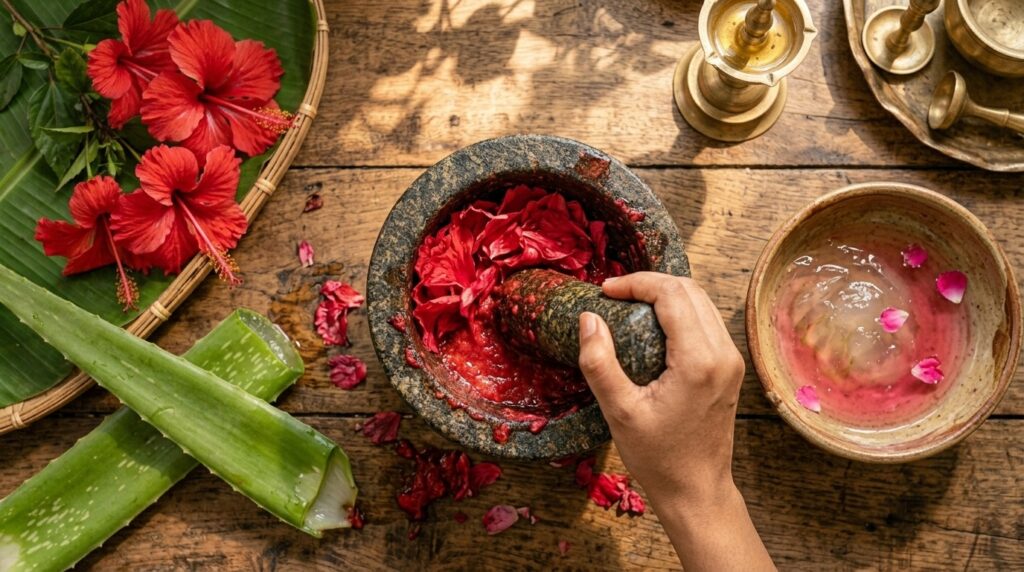
Ingredients (equal parts of each, adjusted to the amount you need):
- Aloe vera gel
- Hibiscus flower paste (fresh hibiscus petals ground into a paste)
- Rose water
How to use:
- Combine equal parts of all three ingredients and mix into a smooth paste
- Apply to the face
- Leave on for about 15 minutes
- Rinse off with cool water
Hibiscus has a long history of use in South Indian beauty traditions, often associated with skin brightness and hair care. As with the other ingredients here, claims about its specific effects on pigmentation reflect traditional belief rather than clinical evidence.
Option 2: Rice Flour and Sugar Scrub, Followed by an Aloe Vera and Coconut Oil Pack
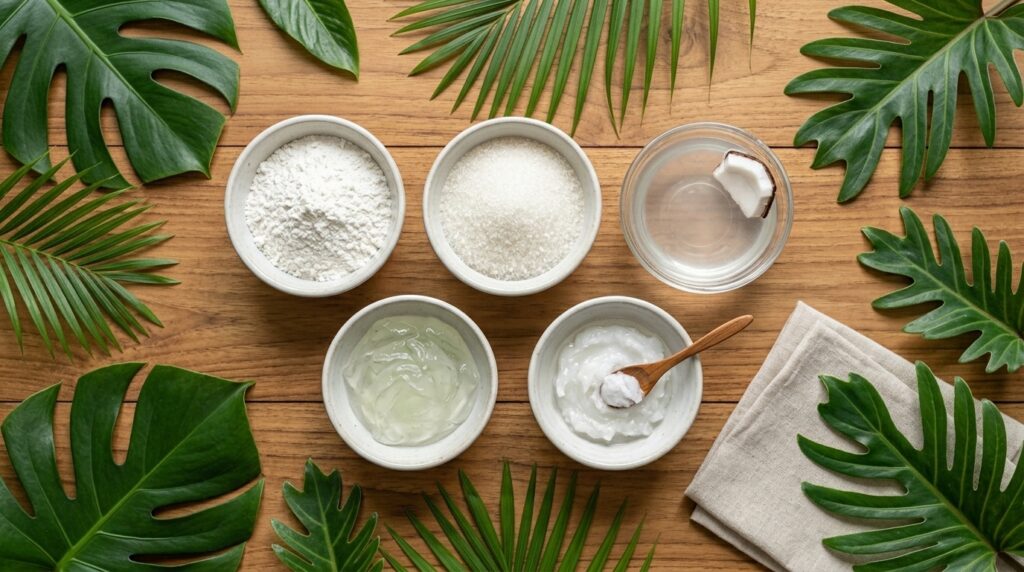
This is a two-step process, used together:
Step 1 — Scrub:
- Mix equal parts rice flour and sugar
- Add a small amount of tender coconut water or fresh tomato juice to form a paste
- Gently scrub onto the face
- Rinse
Step 2 — Face pack:
- Mix equal parts aloe vera gel and coconut oil
- Apply to the face after scrubbing
- Leave on for about 10 to 15 minutes
- Rinse off with cool water
A milk and rice flour paste, or a tomato and rice flour paste, are mentioned as alternative pack options in this same tradition, used the same way.
Why This Tradition Avoids Commercial Soap
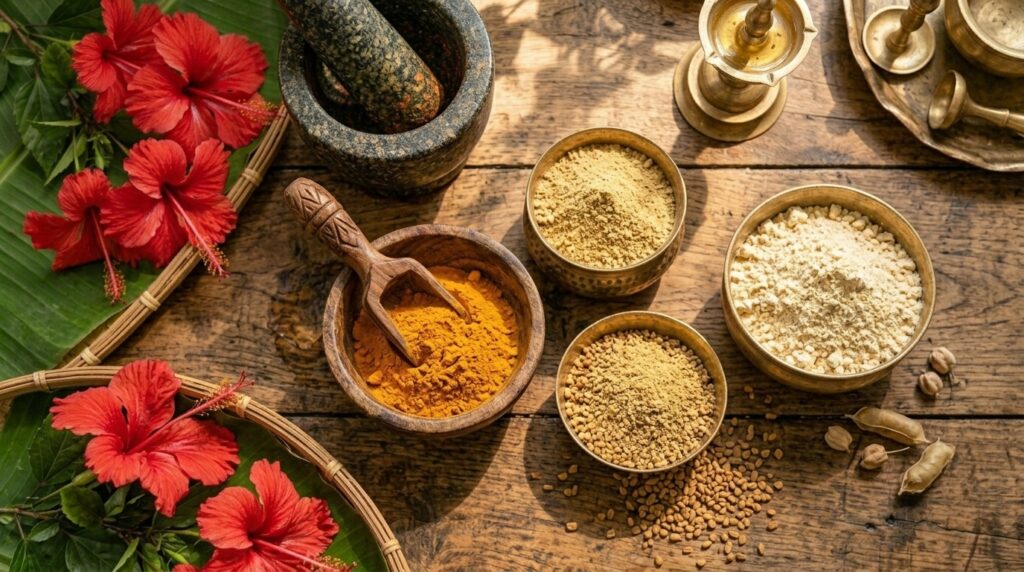
This routine specifically steers away from commercial soaps and shampoos, recommending a homemade herbal bath powder instead.
The traditional Snana Choorna (bath powder) recipe given here:
- 100 grams Kasturi turmeric (wild turmeric, used for skin — not the cooking spice)
- 250 grams fenugreek powder (menthya)
- 500 grams chickpea flour (besan)
Mixed together and used with water as a paste, this powder replaces soap for daily bathing.
Many traditional practitioners prefer herbal bath powders because they are simple and help reduce reliance on packaged products. The environmental benefit of reducing single-use plastic packaging from soap and shampoo bottles is a reasonable, well-supported concern on its own, separate from any specific skin care claim.
For washing the face specifically after these treatments, this tradition suggests chickpea flour, soapnut (Aritha) powder, or mung bean flour as gentle alternatives to facial cleanser.
How to Use This Routine
Here’s how the pieces fit together across a week:
- Daily — massage pure aloe vera gel into the face for 20 to 30 minutes, then rinse with cool water after some additional time
- Two to three times a week — choose one face pack: the hibiscus-aloe-rose water paste, or the rice flour scrub followed by the aloe-coconut oil pack
- For bathing — replace commercial soap with the homemade Snana Choorna (herbal bath powder), or use chickpea flour and similar alternatives for the face specifically
- Be consistent for at least a few months — this tradition holds that visible change in dark spots typically takes around three months of daily practice, not days or weeks
Things to Keep in Mind
- Patch test everything first. Aloe vera, hibiscus, and rice flour are generally well tolerated, but apply a small amount to your inner forearm and wait 24 hours before using on your face.
- This is a cosmetic routine, not a treatment for diagnosed skin conditions. Dark spots can have many causes — sun damage, melasma, post-inflammatory hyperpigmentation, and other conditions — some of which benefit from a dermatologist’s evaluation and treatment rather than a home routine alone.
- A long daily massage is a real time commitment. Twenty to thirty minutes a day, every day, for months is significant. Consider whether this fits realistically into your routine before starting.
- Citrus and tomato juice can increase sun sensitivity for some people. If you use the tomato-based version, consider applying sunscreen afterward, especially before going outdoors.
- Persistent, worsening, or unusual-looking spots should be checked by a dermatologist, since some skin changes need professional evaluation rather than home treatment.
- Pregnant or breastfeeding readers should check with their doctor before trying any new topical herbal routine.
Frequently Asked Questions
How long does it really take to see results with this routine? This tradition holds that consistent daily use over about three months is generally needed before noticing a meaningful difference. This is based on generational practice, not a clinical timeline, and individual results vary significantly.
Can I use store-bought aloe vera gel instead of fresh aloe? Yes, a pure, additive-free store-bought gel works as a practical substitute for fresh aloe straight from the plant — just check the label for added fragrances, alcohol, or coloring.
Is hibiscus safe to use on all skin types? Hibiscus is generally considered gentle in traditional use, but everyone’s skin is different. Patch test first, and discontinue use if you notice any irritation.
Can I use this routine alongside my dermatologist’s treatment for hyperpigmentation? This is a question best asked directly to your dermatologist, since some active ingredients in prescription treatments can interact with other topical products. Always mention any home remedies you’re using when discussing your skincare routine with a healthcare provider.
Why does this routine avoid regular soap? Many traditional practitioners prefer herbal bath powders because they are simple and help reduce reliance on packaged products. If you prefer your regular soap, that’s a personal choice — the rest of this routine doesn’t depend on giving it up.
A Closing Thought
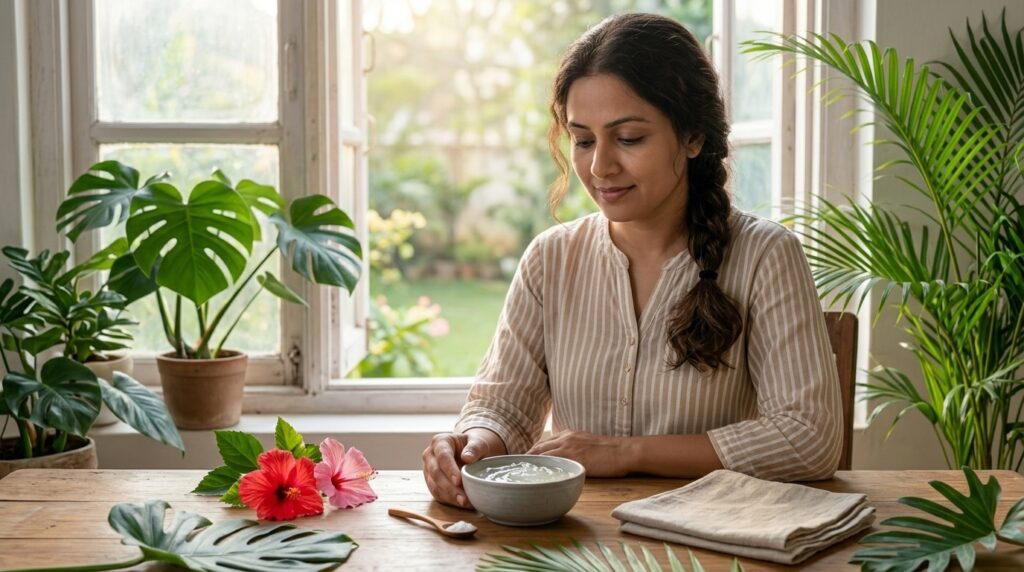
My grandmother’s morning routine never looked like a beauty regimen. It looked like patience — sitting still while she massaged something into her skin, in no hurry, like the thirty minutes themselves were part of the point and not just a means to an end.
This isn’t a routine for someone looking for a quick fix. It asks for real time and real consistency. But if you’ve been searching for something natural to try alongside good sun protection and, where needed, your dermatologist’s guidance, there’s something worth considering in slowing down enough to actually do it properly.
If this was helpful, you might enjoy exploring more traditional approaches to natural skin care on AyurLoom.
Medical Disclaimer
The information in this article is based on traditional wellness knowledge passed down through generations in a Karnataka Brahmin household and is intended strictly for educational and informational purposes only. It does not constitute medical advice, nor is it intended to diagnose, treat, cure, or prevent any disease or medical condition, including any skin condition. The statements in this article have not been evaluated by the U.S. Food and Drug Administration. Individual results vary significantly. Always consult a qualified, licensed healthcare professional — including a dermatologist for skin concerns — before making any changes to your skincare routine, especially if you are pregnant, nursing, or managing a diagnosed skin condition. The author is a traditional wellness knowledge carrier, not a licensed medical practitioner.
About the Author
Sanathani is an engineer by education, raised in a Karnataka Brahmin household where traditional wellness practices were passed from one generation to the next. She translates Kannada household knowledge for modern English readers. Through AyurLoom, Sanathani carries this living wisdom into English for the very first time. “These remedies are not invented. They are remembered.” 🌿